Storytelling has been used as a teaching tool for thousands of years. It is one of the most natural ways children learn to understand and use language. In a high-quality preschool and daycare center, stories are used to support preschoolers’ cognitive and language development. They help build vocabulary, listen, organize thoughts, ask questions, and express ideas. Storytelling is a foundational way to promote your child’s language acquisition and comprehension in a way they understand and engage naturally.
Language Acquisition
Preschoolers learn language through hearing it in ways that they can understand and make sense of it. Stories give access to words they may not come across in ordinary conversation, while showing them how those words fit into sentences, emotions, actions, and relationships. Over time, repeated exposure breeds familiarity. When educators take the time to explain new words, point to pictures, or connect the story to the child, vocabulary comes naturally and is easier to understand and retain. Storytelling also teaches the mechanics of language. Children hear beginnings, problems, solutions, and endings. They become more familiar with tone, sequence, cause and effect, and descriptive language. These skills are necessary for effective communication and reading comprehension.
Active Listening
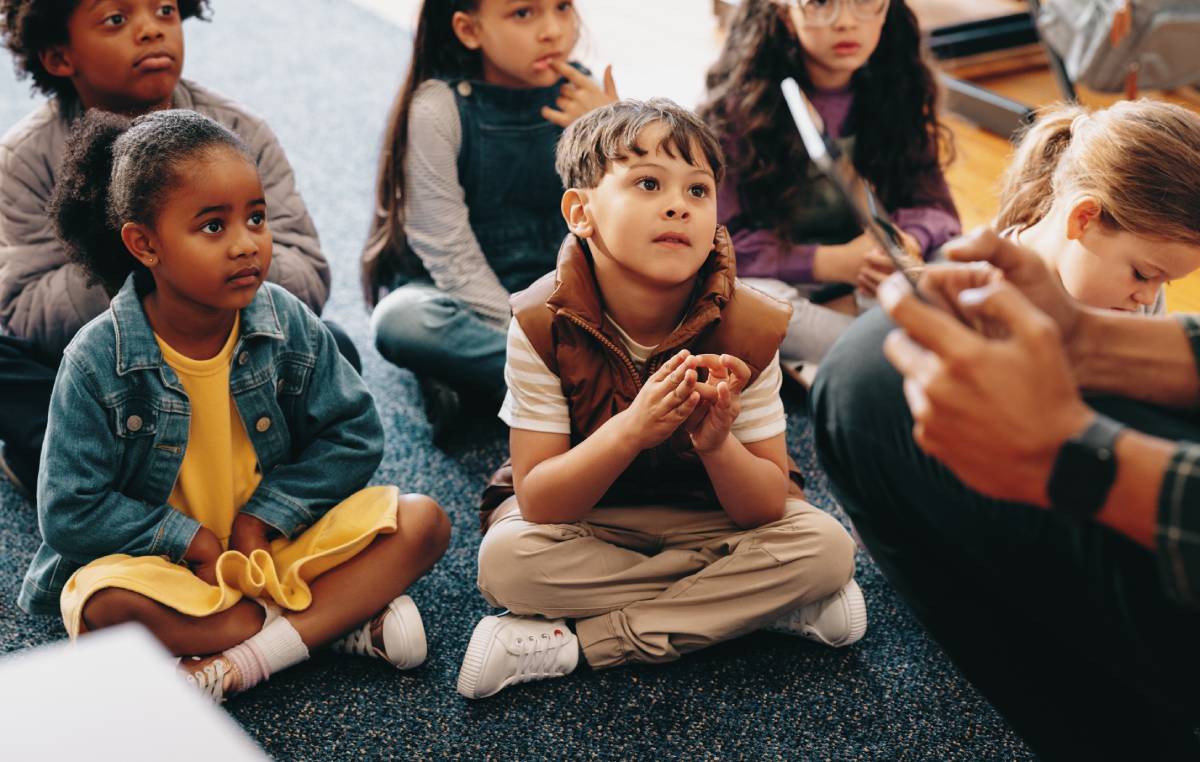
Listening is a primary component of language development. Before a child can respond clearly, they have to hear, process, and understand what is being said. Storytelling engages preschoolers, giving them a reason to listen closely. Children learn to follow a plot, remember details, notice changes in emotion, and try to predict what will happen next. Children who have developed strong listening skills through storytelling can generalize them across conversations, group play, and problem-solving. They begin to understand that words have weight and careful listening can help them understand their environment.
Practice Through Retelling
Retelling is the branch where children begin turning what they have heard into language of their own. This is beneficial in connecting thoughts and remembering characters, settings, conflict, and solutions. A child may start with short phrases, gestures, or pictures, then progress to full sentences. Children can be encouraged to retell using puppets, felt boards, dramatic play, picture cards, and simple questions. This takes advantage of children’s natural ability to learn through hands-on activities, making language feel less intimidating.
Imagination to Conversation
Stories are a natural invitation for children to talk and engage. Your child may want to converse about why a character made a certain choice, develop an alternate ending, or make connections in their own life. Conversations like these are great for moving from listening to expressing. Pretend play is a significant learning avenue for children, and storytelling is often the starting point for this kind of play. Storytelling also sparks children’s creativity, helping them begin creating their own stories and share them with parents, educators, and peers.
Encouraging Language Development Through Storytelling
Effective storytelling is interactive and most beneficial when adults read with expression and enthusiasm, ask thoughtful questions, invite predictions, and give children time to process and respond. Parents and teachers can propagate language development by reading daily, repeating favorite books, encouraging children to describe pictures, and asking open-ended questions. A quality preschool or daycare program prioritizes storytelling. It helps build language by providing words, structure, imagination, and meaning for communication. Every story heard, retold, questioned, and acted out is an opportunity to gain a better understanding of language.
Schedule a tour to see how we use storytelling, play, and conversation to help preschools develop language.